
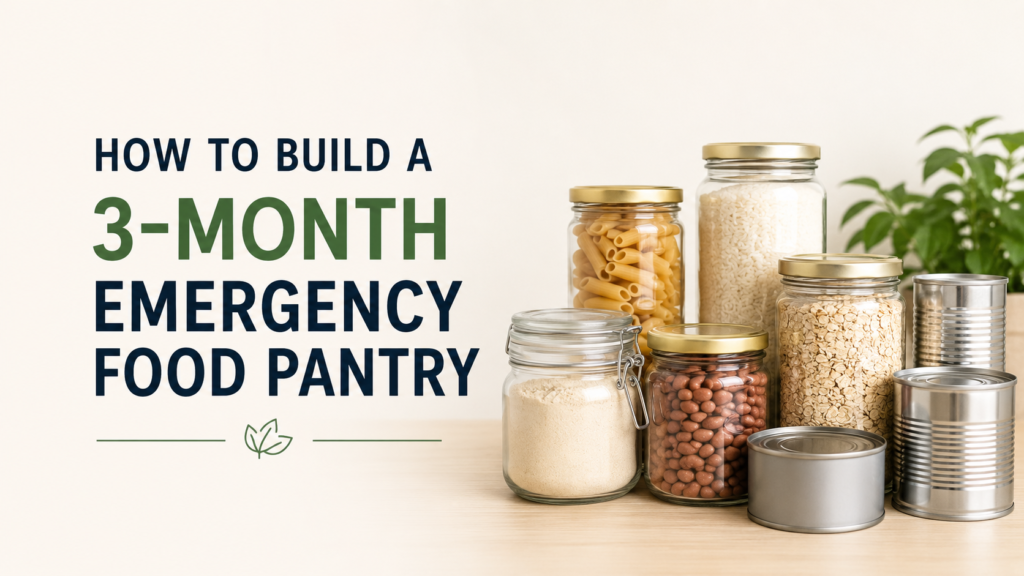
The phrase “emergency pantry” used to conjure images of tinfoil hats and underground bunkers in my mind, and I avoided the whole topic out of a slightly embarrassed sense that it wasn’t for normal, reasonable people. Then I went through a genuinely difficult month — illness, a job situation, a series of things that meant getting to the shops was harder than usual — and having even a modest stock of food at home made an enormous practical difference. Learning how to build a 3-month emergency food pantry isn’t about doomsday prepping. It’s about resilience, and it’s honestly just sensible.
Why Three Months Specifically?
Two weeks is the bare minimum most emergency preparedness guidance suggests, and it covers short-term disruptions — illness, a temporary cash flow problem, severe weather. Three months provides genuine flexibility — covering job loss, extended illness, supply chain disruptions, or simply months where money is unexpectedly tight. It’s substantial enough to matter without requiring the kind of space and investment that six months to a year demands.
- Renter-Friendly Kitchen Upgrades That Come Off Clean (and Protect Your Deposit)
- Is It Worth Buying a Countertop Microwave Convection Oven? Our Honest Verdict
- Does Painting Kitchen Cabinets Add Value to Your House? Our Honest View
- Satin vs Semi-Gloss Paint for Kitchen Walls: Which Did We Choose?
- Is Chalk Paint Food Safe for Pantry Shelves? What We Found Out Before Using It
The Building Blocks: How Much of Each Category
For one adult, a sensible 3-month emergency food pantry includes approximately:
Grains and Carbohydrates
- 9kg rice (roughly 100g per day average across various meals)
- 4–5kg pasta
- 3kg oats
- 3kg flour
- 2kg dried lentils and split peas
Proteins
- 20–25 tins of beans, chickpeas, or lentils
- 15 tins of fish (tuna, salmon, sardines)
- 2kg peanut butter or other nut butter
- A selection of freeze-dried meals for variety and quick options
Fruits and Vegetables
- 20 tins of tomatoes
- 15 tins of mixed vegetables, sweetcorn, peas
- 10 tins of fruit
- 2kg dried fruit (raisins, apricots, dates)
Fats and Flavourings
- 2 litres cooking oil
- Stock cubes/powder — enough for daily use across 3 months
- A core spice collection (see our pantry staples list for the essentials)
- Salt, sugar, honey
How to Build a 3-Month Emergency Food Pantry on a Realistic Timeline
Don’t try to buy three months of food in one shopping trip — both your budget and your storage space will struggle. Spread it over 8–12 weeks:
- Weeks 1–3: Build your grain and carbohydrate base. These are cheap and have the longest shelf life, so getting them sorted first gives you a foundation.
- Weeks 4–6: Add tinned proteins and vegetables, a few extra tins per shopping trip.
- Weeks 7–9: Round out with fats, condiments, and flavourings.
- Weeks 10–12: Add freeze-dried meals and any specialty items, and do a full inventory check to identify gaps.
Where to Store a 3-Month Emergency Pantry
This is genuinely one of the biggest practical challenges of how to build a 3-month emergency food pantry — finding the space. Solutions that work well:
- Under-bed storage boxes for tins and dried goods (keep cool and dark)
- Under-stair storage if you have it
- A dedicated shelf unit in a garage or utility room (provided it stays cool and dry, away from extreme temperature swings)
- A converted closet — see our guide on converting a closet into a pantry for the full process
Transfer everything susceptible to pests — flour, oats, rice, dried legumes — into proper airtight containers. The PANTRYSTAR large 5.2L airtight containers are ideal for bulk emergency storage because each one holds a full 5lb bag with room to spare, and the seal genuinely keeps moisture and pests out over long storage periods.
The Critical Rule: Rotate It
An emergency pantry that just sits untouched for years is wasteful and risks everything going stale or expiring simultaneously. The better approach — and the way I actually run mine — is to treat the emergency pantry as an extension of your everyday cooking stock. Use items from it in regular meals, and replace what you use. This way nothing goes to waste, and your 3-month emergency food pantry is always fresh and rotating rather than a static, forgotten stockpile.
Budget Summary
A complete 3-month emergency food pantry for one adult typically costs £150–220 when built gradually using budget-friendly staples and supermarket own-brand products. Spread over 8–12 weeks, that’s roughly £15–25 extra per week on top of your normal shop — a manageable addition for the genuine peace of mind it provides.