
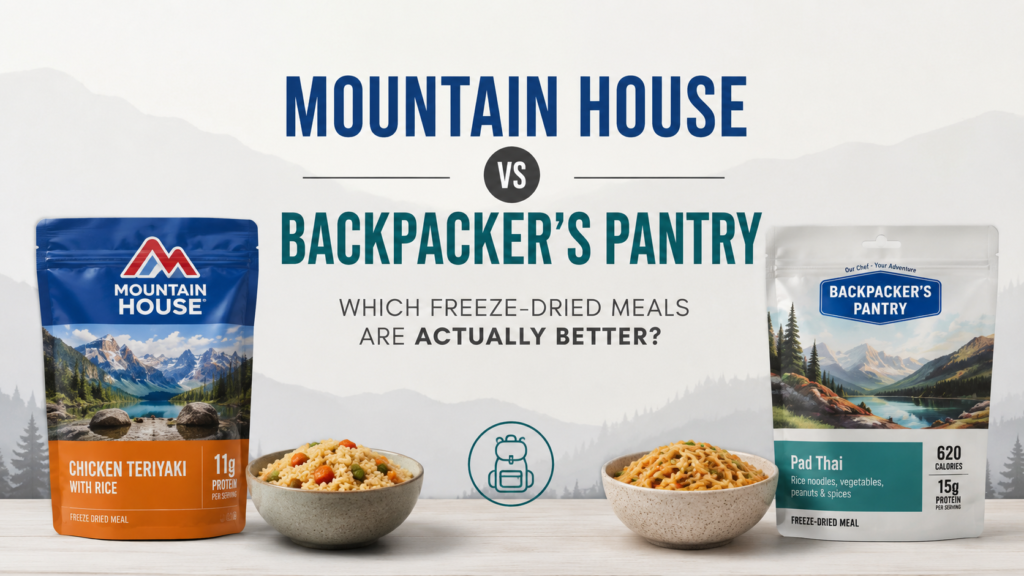
I’ve eaten an embarrassing number of freeze-dried meals over the years, mostly while camping, occasionally while testing options specifically for an emergency pantry stock, and once memorably during a power cut that lasted considerably longer than anyone in the house had expected. Across all those meals, two brands have consistently stood out from the wider field, and I’m regularly asked which one is actually better. Here’s my honest, considered comparison of Mountain House vs Backpacker’s Pantry.
The Basics: What Are We Comparing?
Both brands produce freeze-dried, just-add-hot-water meals designed primarily for camping, backpacking, and longer-term emergency food storage. Both have a long track record and strong overall reputations in the category, but they take meaningfully different approaches in a few key respects that matter depending on your specific priorities. As mentioned in our broader guide on emergency food supply pantry essentials, freeze-dried meals are a genuinely excellent addition to any long-term food storage plan, and choosing the right brand for your specific needs matters considerably for whether you’ll actually enjoy eating them when the time comes.
Taste and Quality
Mountain House has built its reputation on genuine consistency — their classic meals, including beef stroganoff, chicken and rice, and pasta primavera, deliver a reliably decent, comforting flavour that holds up well across the entire product range without much variation in quality between individual meals. Backpacker’s Pantry tends to lean more into adventurous, restaurant-inspired flavour profiles and has a noticeably stronger range of vegetarian and vegan options, with genuinely distinct, well-developed flavours rather than simplified meat-free versions of otherwise standard dishes.
Variety
Backpacker’s Pantry generally wins on overall variety, particularly for plant-based diets specifically — their range includes a considerably wider spread of international flavours and dietary options than Mountain House currently offers. Mountain House maintains a more focused range concentrated on classic American comfort food styles, which is either a genuine strength or a limitation depending entirely on what you’re personally looking for in a freeze-dried meal.
Shelf Life
Mountain House is particularly well known for its exceptionally long shelf life — many of their pouches are rated for up to 30 years under proper storage conditions, making them a genuine standout choice specifically for long-term emergency storage rather than purely for shorter camping trips. Backpacker’s Pantry meals have a respectable shelf life too, though it’s generally somewhat shorter, often in the range of several years rather than multiple decades, making them better suited overall to active outdoor use and more regular stock rotation rather than ultra-long-term storage.
Serving Size and Portions
Backpacker’s Pantry meals tend to offer slightly more generous serving sizes across many of their offerings, which matters considerably if you’re using these meals for genuinely filling dinners after a long day of hiking, rather than purely as a calorie-light backup option tucked away for emergencies.
Price
The two brands are broadly comparable in price, with some variation depending on the specific meal and pack size you’re comparing. Buying in bulk multi-packs from either brand typically brings the per-meal cost down meaningfully compared to purchasing single pouches individually.
Which Should You Choose?
- Choose Mountain House if: long-term emergency storage shelf life is your absolute priority, you prefer classic comfort food flavours over more adventurous options, and consistency matters more to you than variety
- Choose Backpacker’s Pantry if: you want considerably more variety, especially in vegetarian and vegan options, you’re prioritising active outdoor use over multi-decade storage, and you want more adventurous, restaurant-style flavour profiles
My Honest Recommendation
I keep both brands in rotation, genuinely. Mountain House forms the backbone of my longer-term emergency stock specifically because of the exceptional shelf life, while I lean toward Backpacker’s Pantry for actual camping trips, where variety and overall flavour experience matter more to me than multi-decade storage capability. If you’re building out a complete pantry — see our guide to non-perishable foods that last years for the fuller picture — having both brands represented gives you a genuinely good combination of long-term stability and day-to-day variety, rather than committing entirely to just one approach.
- How to Stop Pantry Shelves Sagging Under Weight (Before They Fail Completely)
- Do Mothballs Kill Pantry Moths? What You Need to Know Before Using Them Near Food
- Can Organisation for Your Pantry: The Best Ways to Store Tins So You Can Actually Find Them
- How to Repurpose an Old Bookcase as a Kitchen Pantry (We’ve Done It Twice)
- Best Paint for Pantry Shelves: What We’d Use and Why It Matters
How to Decide Without Trying Everything Yourself
If buying a wide sample from both brands isn’t practical, a reasonable shortcut is matching the decision to your primary use case rather than your taste preferences alone. If your main goal is a genuine emergency stockpile that might sit untouched in a cupboard for years, weight your decision toward Mountain House and its proven long shelf life. If your main goal is actual regular use during camping trips, weekend hikes, or simply convenient meals at home, Backpacker’s Pantry’s broader variety will likely keep things more interesting across repeated use, since you’re considerably less likely to grow tired of the same handful of flavours appearing again and again.
Trying Both Without Overcommitting
If you’re still undecided after weighing everything above, a sensible middle path is buying a small variety pack or a handful of individual pouches from each brand rather than committing to a large bulk order from either one straight away. Most outdoor retailers and online stores sell single pouches specifically for this kind of trial purpose, and the relatively modest cost of testing four or five meals across both brands is genuinely worthwhile before settling on a larger long-term order. Pay attention not just to flavour but to how filling each meal actually is relative to its stated serving size, since this varies more between brands than the marketing copy on the packaging always makes clear.
Whichever way your own preferences land, both Mountain House and Backpacker’s Pantry represent a genuine step up from the cheaper, less reputable freeze-dried brands sometimes found at the bottom end of the market, where flavour and rehydration quality can be noticeably disappointing by comparison. Spending slightly more for either of these two established, well-reviewed brands is, in my experience, consistently worth the small price premium over the lesser-known alternatives.