
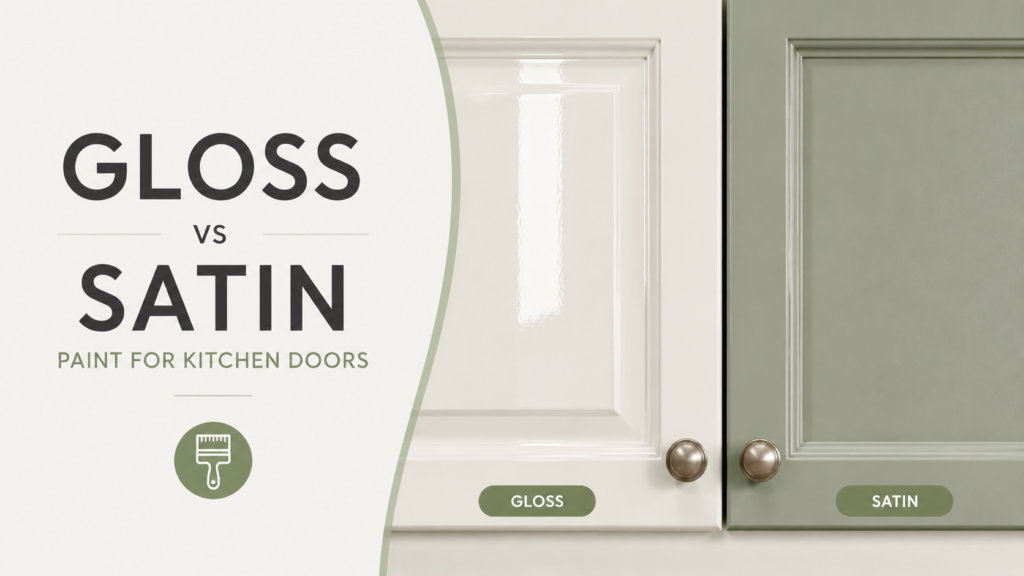
I painted one set of kitchen cabinet doors in gloss and a second, slightly later set in satin, mostly by accident rather than careful design — I’d run out of the gloss tin partway through the project and genuinely didn’t fancy another trip to the shop that particular evening. This accidental experiment turned out to be genuinely useful, because I’ve now lived with both finishes side by side in the same kitchen for years, and I have a clear, practical view on gloss vs satin paint for kitchen doors that I’m happy to share.
The Core Difference
Gloss has a high, strongly reflective shine. Satin has a softer, low sheen that’s clearly visible but considerably less reflective than gloss. This fundamental difference in sheen drives almost every practical distinction between the two finishes for kitchen door use, a topic we also cover more broadly in our guide on the best paint finish for kitchen cabinets.


Durability: Gloss Wins, But Not Dramatically
Gloss paint is technically the most durable and easiest to wipe clean of the two options, since its smooth, non-porous surface resists grease and moisture more completely than a softer finish would. Satin is also genuinely washable and durable in its own right — just slightly less so than full gloss. Across several years of daily kitchen use on both finishes in my own home, the practical difference in how often I’ve needed to touch up either one has been fairly minimal; both have held up considerably well to genuine daily wear.
Appearance: This Is Where the Real Difference Shows
Gloss shows every single imperfection in the underlying surface — dents, filler marks, even slightly uneven preparation work all become clearly visible under that reflective sheen. My gloss doors, which had a couple of minor dents left over from the previous owner that I didn’t fully address before painting over them, show those imperfections clearly to this day. My satin doors, painted over similarly imperfect surfaces, hide them considerably better. If your cabinet doors aren’t in genuinely pristine condition before painting, satin is the noticeably more forgiving choice of the two.
Application Difficulty
Gloss is genuinely harder to apply well than satin. Because the reflective surface shows every brush stroke and roller mark so clearly, achieving an even, professional-looking gloss finish typically requires either spray application or very careful technique with a high-quality roller — see our guide on how to get a smooth finish when painting kitchen cabinets for the full technique breakdown. Satin is considerably more forgiving of minor application inconsistencies and small technique errors along the way.
Light and Room Feel
Gloss bounces more light around a room, which can genuinely make a small or dark kitchen feel noticeably brighter — a real practical advantage in some spaces, particularly those lacking generous natural light. Satin gives a softer, calmer overall look that many people find more visually comfortable for everyday living, though this distinction is largely a matter of personal taste rather than a functional difference between the two finishes.
My Honest Recommendation
For genuinely heavy-use kitchen cabinet doors on a perfectly smooth, well-prepared surface, gloss gives you maximum durability and a striking visual look, provided you’re willing to invest the extra effort in careful application. For most real-world kitchens, especially where the cabinet surface isn’t perfectly flawless or you’re applying paint with a roller and brush rather than a professional spray setup, satin is the more practical, forgiving choice that still holds up extremely well to genuine daily wear and tear.
What About Semi-Gloss?
If you’re genuinely torn between the two, semi-gloss is a sensible middle ground — more durable and reflective than satin, while more forgiving of surface imperfections than full gloss. It’s a perfectly reasonable compromise if you can’t fully decide between the two extremes.
Whichever finish you ultimately choose, proper surface preparation matters considerably more than the sheen level itself when it comes to long-term durability — see our complete guide on getting a smooth finish on kitchen cabinets for the preparation steps that make the biggest genuine difference regardless of which specific paint sheen you decide on in the end.
A Practical Test Before Committing to Either Finish
If you’re still uncertain after weighing everything above, I’d genuinely recommend painting a small, inconspicuous test patch in each finish — perhaps the inside of a cupboard door or a small offcut of similar wood — before committing to an entire kitchen’s worth of cabinets. Live with both test patches for a week or two, noting how each catches the light at different times of day and how each shows up fingerprints and general daily handling. This small amount of upfront testing genuinely helps avoid the more costly mistake of repainting an entire kitchen’s worth of doors after discovering, partway through, that your chosen finish doesn’t suit the space the way you’d hoped.
How Sheen Affects Cleaning Routine Day to Day
Beyond the upfront decision of which finish to choose, it’s worth thinking practically about how gloss versus satin affects your actual day-to-day cleaning habits once the cabinets are finished and back in regular use. Gloss doors wipe clean almost effortlessly with just a damp cloth, even for fairly stubborn grease marks built up near a hob or a frequently-used handle. Satin doors require a little more effort for the same level of grease removal, sometimes needing a mild degreasing spray rather than water alone, though they still clean up perfectly well with normal kitchen cleaning products. If you cook frequently with oil-heavy methods, particularly frying, this practical cleaning difference is worth weighing more heavily than it might be for a household that cooks more lightly and generates less airborne grease to begin with.
It’s also worth considering how visible cleaning marks themselves become on each finish over time. Gloss, precisely because it’s so reflective, can sometimes show faint streaking from cleaning if a cloth isn’t completely lint-free or if the cleaning product isn’t fully buffed away afterward. Satin is considerably more forgiving here, masking minor streaking far more effectively than a high-gloss surface ever could. For households that want a genuinely low-maintenance, low-fuss cleaning routine without needing to think too hard about cloth quality or buffing technique, this is a small but real point in satin’s favour that’s easy to overlook when comparing the two finishes purely on paper.
- Renter-Friendly Kitchen Upgrades That Come Off Clean (and Protect Your Deposit)
- Is It Worth Buying a Countertop Microwave Convection Oven? Our Honest Verdict
- Does Painting Kitchen Cabinets Add Value to Your House? Our Honest View
- Satin vs Semi-Gloss Paint for Kitchen Walls: Which Did We Choose?
- Is Chalk Paint Food Safe for Pantry Shelves? What We Found Out Before Using It
How Each Finish Ages Over Several Years
Beyond the initial application and early years of use, it’s worth considering how gloss and satin compare once a kitchen has genuinely settled in over five or more years of daily life. Gloss tends to show its age in a particular way — fine scratches from cutlery, keys, or general handling accumulate gradually and become more visible precisely because the reflective surface highlights every mark rather than absorbing it the way a more matte finish would. Satin ages somewhat more gracefully in this specific respect, since minor surface marks simply don’t catch the light in the same revealing way.
That said, gloss generally resists actual colour fading and yellowing slightly better than satin over a comparable period, particularly in kitchens that receive a meaningful amount of direct sunlight through a window. If you’re choosing a finish with the genuine expectation of keeping the same cabinets for a decade or more without repainting, this is worth factoring into your decision alongside the more immediate considerations of durability and appearance covered earlier in this guide.
Final Verdict
Both gloss and satin are genuinely capable, durable choices for kitchen cabinet doors when applied properly to a well-prepared surface. The right choice ultimately comes down to your specific priorities: choose gloss if maximum durability, brightness, and a striking visual statement matter most to you and you’re working with cabinets in good physical condition; choose satin if a forgiving, low-maintenance finish that hides minor imperfections and ages gracefully matters more than achieving the highest possible shine. Neither choice is objectively wrong, and as covered throughout this guide, the practical difference between them in genuine day-to-day use is smaller than the initial decision might feel.