
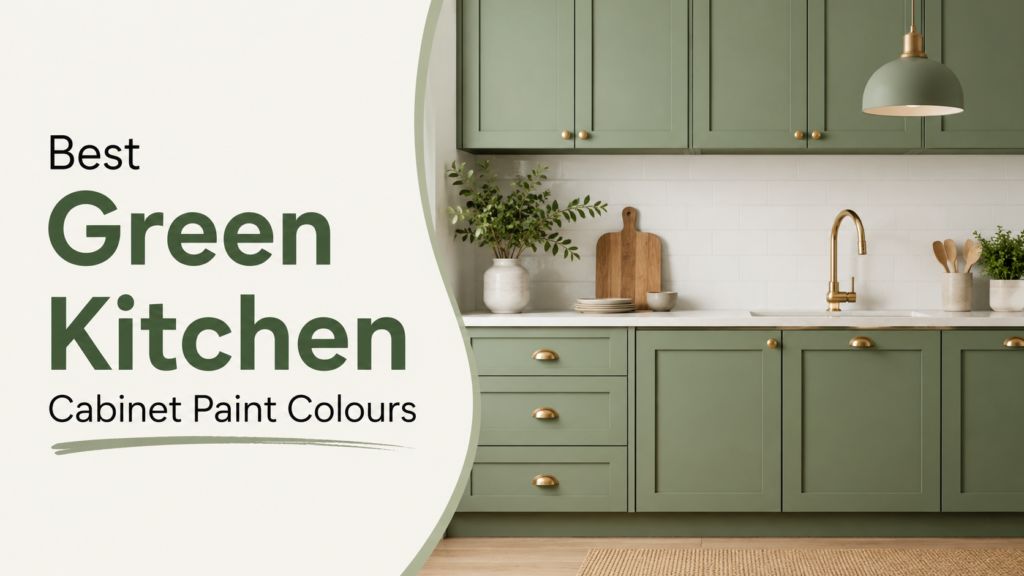
Green kitchen cabinets have gone from a slightly risky, unconventional design choice to genuinely mainstream over the last several years, and having painted my own cabinets a deep sage colour a while back, I completely understand why the shift happened. Green sits in this wonderful sweet spot of feeling fresh and natural without being quite as visually demanding as some bolder, more attention-grabbing colour choices can be. Here are the best green kitchen cabinet paint colours genuinely worth considering, along with the practical factors that should guide your specific choice rather than just following whatever’s trending at the moment.
- Can Organisation for Your Pantry: The Best Ways to Store Tins So You Can Actually Find Them
- How to Repurpose an Old Bookcase as a Kitchen Pantry (We’ve Done It Twice)
- Best Paint for Pantry Shelves: What We’d Use and Why It Matters
- How Long Do Pantry Moths Live Without Food? What This Means for Clearing an Infestation
- Can Cats Eat Moths? Are Pantry Moths Harmful to Cats?
Why Green Works So Well for Kitchen Cabinets
Green is a genuinely versatile colour family that spans an enormous range — from soft, pale sage that reads almost neutral in a room, right through to deep, dramatic forest tones that function as a genuine statement colour on their own. This breadth means there’s realistically a suitable green for almost any kitchen style, from minimalist Scandinavian design through to a more traditional country kitchen aesthetic, without needing to compromise on the overall vision for the space.
The Best Green Shades for Kitchen Cabinets
Sage Green
The most popular green cabinet colour by a significant margin, and genuinely for good reason — sage has a soft, muted, grey-green quality that works beautifully alongside both warm and cool kitchen colour schemes. It pairs particularly well with brass or gold hardware and natural wood worktops, creating a cohesive, considered look without much additional effort.
Deep Forest Green or Hunter Green
A bolder, considerably more dramatic choice that works particularly well in larger kitchens, or specifically as an accent — such as on a kitchen island while the surrounding cabinets stay lighter in tone. Pairs beautifully with brass hardware and marble or pale stone worktops for a genuinely striking visual contrast.
Olive Green
A warmer, more earthy green carrying noticeable brown undertones. Works particularly well in kitchens already featuring a lot of natural wood and warm metal tones, helping to create a cohesive, organic overall palette throughout the space.
Mint or Pale Seafoam Green
A lighter, considerably fresher option that works well in smaller kitchens where you want some genuine colour without the visual weight that a darker shade inevitably brings — see our guide on the best paint colour for a small dark kitchen if light reflection in a genuinely compact space is a particular priority for your own situation.
Bottle Green
A rich, deep, slightly blue-toned green that’s become a particularly popular choice specifically for kitchen islands — dramatic enough to function as a genuine feature on its own, while remaining a genuinely classic, timeless colour choice rather than a fleeting trend likely to date quickly.
How to Choose the Right Green for Your Specific Kitchen
- Natural light levels: darker greens such as forest, bottle, or hunter work best in kitchens already benefiting from good natural light; paler greens like sage and mint are considerably more forgiving in darker spaces lacking the same light levels
- Worktop and flooring colours: warmer greens such as olive and sage pair well with wood tones; cooler greens such as bottle and hunter pair well with marble or pale stone surfaces
- Hardware choice: brass and gold hardware complement almost every shade of green beautifully; chrome and black hardware tend to work better specifically with cooler, more muted green tones
Paint Type and Application
Whichever specific shade you ultimately choose, the application principles remain genuinely consistent with any other cabinet colour — proper preparation matters enormously, and the right finish, satin or semi-gloss for durability as covered in our guide on the best paint finish for kitchen cabinets, determines how well the chosen colour holds up to genuine daily kitchen use over time. If you’re using chalk paint for a softer, more matte green finish, make absolutely sure to seal it properly — see our guide on whether chalk paint needs waxing or sealing for the kitchen-specific durability considerations that apply regardless of which particular shade of green you’ve settled on.
My Honest Recommendation
For most kitchens, sage green remains genuinely the safest and most universally flattering choice — it works comfortably with almost any worktop, flooring, and hardware combination you’re likely to already have in place, and it doesn’t carry the same risk of feeling dated that some bolder, more overtly trend-driven colours sometimes do after a few years. If you want something with considerably more visual drama and genuinely have the natural light available to support it, a deep forest or bottle green applied to an island or a single feature wall of cabinets makes a genuinely striking, memorable statement within the wider kitchen.
Living With a Bold Green Choice Long Term
If you do decide on one of the bolder, darker green options, it’s worth thinking honestly about how the colour will sit with you over a longer period, not just in the excitement of a fresh renovation. Darker, more dramatic colours tend to feel genuinely exciting and characterful for the first year or two, but it’s worth considering whether you’d be comfortable living with the same bold choice for a full decade or more, since repainting kitchen cabinets is a considerably bigger undertaking than repainting a simple wall. Sage and other paler, more muted greens tend to age more gracefully over a longer period precisely because they read as more genuinely neutral, while bottle and forest green carry slightly more risk of eventually feeling tied to a particular design moment rather than aging as gracefully as a more restrained choice might.
Testing Green Shades Properly Before Committing
As with any significant paint colour decision for kitchen cabinets, it’s genuinely worth painting a sample patch on an inconspicuous cabinet surface before committing to a full repaint across the whole kitchen. Green shades in particular can shift considerably depending on the surrounding light, the colour of your worktop and flooring, and even the specific metal tone of your chosen hardware, so a colour that looks perfect on a small paint chip in a shop can read quite differently once applied across full-sized cabinet doors in your own kitchen’s actual lighting conditions.
Live with the test patch for at least a few days, viewing it alongside your existing worktop, flooring, and any hardware samples you’re considering, before making a final decision. This small amount of patience consistently produces better results than committing to a full kitchen’s worth of green cabinetry based purely on how appealing the colour looked in a showroom or on a screen, where lighting conditions are often quite different from those in an ordinary home kitchen.
Final Thoughts on Choosing Green
Green has earned its considerable popularity in kitchen design for genuinely good reasons — it offers real warmth and character without the starkness of some other bold colour choices, and the breadth of available shades means there’s a genuinely suitable option for almost any kitchen style and lighting condition. Whether you land on a safe, versatile sage or a bold, dramatic bottle green, taking the time to test properly and consider how the colour will age over the years ahead will serve you considerably better than choosing based purely on what’s currently trending in kitchen design.