
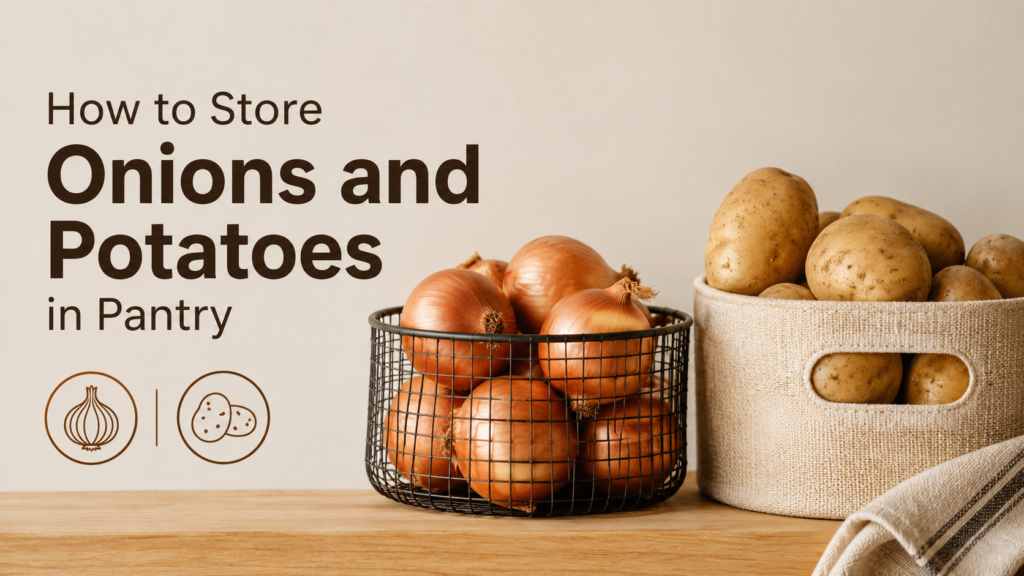
Somewhere in a bowl on my kitchen counter right now, there is an onion that has started sprouting. I know this, and I’m mildly ashamed, because I genuinely know how to store onions and potatoes in pantry properly. I just didn’t do it this week. Let me give you the information I clearly need to remind myself of.
Storing onions and potatoes seems like it should be the easiest thing in the world — chuck them in a bag, put them somewhere dark, done. And yet I’d wager that most people reading this have, at some point, found a potato that’s gone soft and grown enough tentacles to be concerning, or an onion so pungent it’s scented the whole cupboard. Here’s how to avoid both.
The Golden Rules for Storing Onions and Potatoes in the Pantry
Both onions and potatoes need the same three conditions to store well: cool, dark, and well-ventilated. They are completely intolerant of moisture, heat, and light. Get those three right and both will last for weeks — sometimes months.
The one thing they absolutely cannot share is a storage space. I’ll explain why in a moment, but first — the individual requirements.
How to Store Onions in the Pantry
Keep Them Dry and Ventilated
Onions need airflow more than almost anything else. Storing them in a sealed plastic bag or an airtight container is exactly wrong — the trapped moisture causes them to rot from the inside out within days. Mesh bags, open baskets, or even a hanging net are all ideal. The original mesh bag onions sometimes come in from the supermarket is actually a decent storage solution; don’t transfer them to a sealed container.
Temperature
Ideally 4–10°C — cooler than typical room temperature but warmer than the fridge. A pantry or cool cupboard suits this perfectly. At typical room temperature (18–22°C), onions will last two to four weeks. In a cooler pantry, they can last up to two months. Don’t refrigerate whole unpeeled onions — the cold and humidity of the fridge makes them soft and mouldy faster.
Away From Light
Light causes onions to sprout and turn bitter. Keep them in a dark cupboard or pantry. If you’re storing them on an open shelf, the back of the shelf away from the kitchen light is better than a prominently lit spot.
How to Store Potatoes in the Pantry
Dark is Non-Negotiable
Light causes potatoes to produce solanine — a mildly toxic compound that turns the skin green and makes the potato taste bitter. Green potatoes should have the green parts cut away generously before eating; heavily green potatoes should be discarded. Storing potatoes in complete darkness prevents this entirely. A dark pantry, a paper bag, or a hessian sack all work well.
Cool But Not Cold
The fridge is too cold for potatoes — below about 6°C, potato starch converts to sugar, which gives them an unpleasant sweetness and makes them discolour oddly when cooked. Aim for 7–10°C if possible. Most kitchen pantries are a bit warmer than this, which is fine — potatoes will last two to three weeks at room temperature in a dark, dry spot.
Ventilation
Like onions, potatoes need to breathe. Hessian or paper bags are ideal. Plastic bags trap moisture and cause rot. If you’ve bought potatoes in a sealed plastic bag from the supermarket, transfer them to paper or a ventilated basket as soon as you get home.
Why Onions and Potatoes Cannot Be Stored Together
This is the crucial part of knowing how to store onions and potatoes in the pantry that most people miss. Onions emit ethylene gas and moisture, both of which cause potatoes to sprout and rot significantly faster than they would alone. Potatoes return the favour by releasing moisture that softens onions. They genuinely make each other go off faster. Keep them in separate areas of the pantry — ideally different shelves or different containers entirely.
What to Do If an Onion or Potato Has Sprouted
A sprouted onion or potato isn’t automatically ruined — it just means it’s using up its stored energy to try to grow. A lightly sprouted potato with firm flesh is fine to eat once you cut away the sprouts and any green patches. A heavily sprouted, soft, or shrivelled potato should be composted. A sprouted onion is completely edible — the sprout itself is mildly bitter, so either remove it or use the whole thing in a cooked dish where the bitterness will be masked.
Storage Summary
- Onions: cool, dark, ventilated, away from potatoes — lasts 2–8 weeks depending on temperature
- Potatoes: cool, dark, ventilated, away from onions — lasts 2–3 weeks at room temperature, longer in a cool pantry
- Never: sealed bags, the fridge, near each other, or near fruit
Master how to store onions and potatoes in the pantry with these simple rules and you’ll virtually eliminate the waste that comes from finding a sad, sprouting bag at the back of the cupboard.