
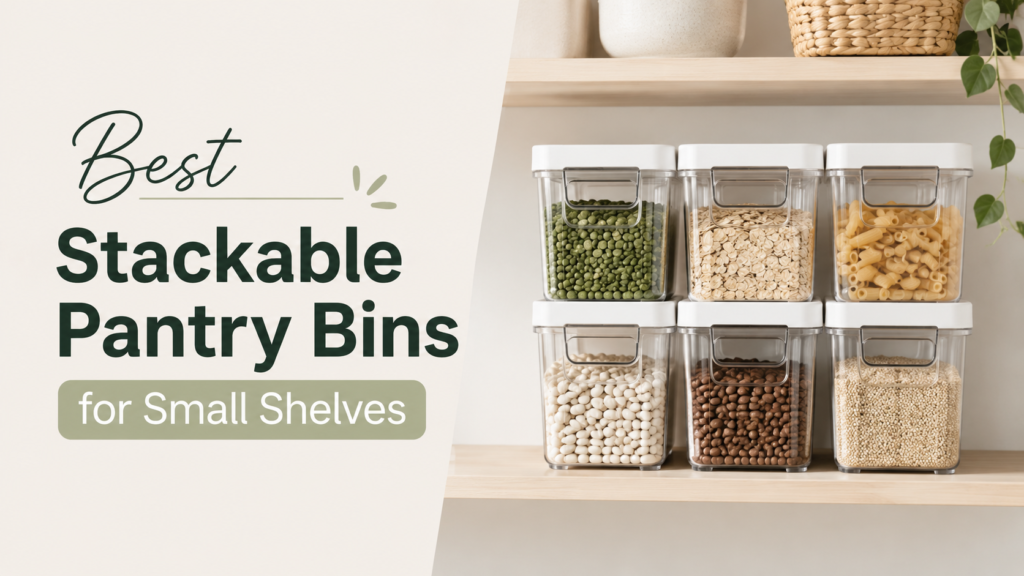
Small pantry shelves have a cruel habit of being deep enough to hide things but not deep enough to comfortably stack things without everything toppling the moment you reach for an item at the back. I learned the hard way — a literal landslide of snack packets onto my kitchen floor — that the fix isn’t more willpower or careful stacking. It’s the right bins. Here’s what I’ve learned about finding the best stackable pantry bins for small shelves, including what’s genuinely worth the money and what’s a waste of it.
What Are the Best Home Pantry Organizers Available for Small Kitchens?
Why Stackable Bins Specifically (Not Just Any Container)
The “stackable” part matters more than people realise. A small pantry shelf is often tall enough for two stacked bins but the width and depth to fit only one row of standard containers. Bins designed to stack — with reinforced bases and slightly recessed lids — let you double your effective storage in the same footprint without anything wobbling or collapsing.
What Makes a Genuinely Good Stackable Pantry Bin
Flat, Reinforced Bases
Cheap bins often have a slightly domed or uneven base that makes stacking unstable. Look for bins specifically marketed as stackable, which typically have a flat, often slightly recessed base designed to interlock with the bin below.
Handles That Don’t Get in the Way
Side handles (built into the sides of the bin, flush or near-flush) work much better for stacking than top handles, which prevent a clean stack and waste vertical space. For the best stackable pantry bins for small shelves, side-handle designs are almost always the better choice.
Clear or Semi-Clear Material
You want to see what’s inside without pulling the bin out, especially in a stacked configuration where the bottom bin’s contents are otherwise invisible. Clear or frosted plastic outperforms solid colours for this reason, even though solid colours can look nicer.
Appropriately Sized for Your Shelf Depth
This sounds obvious but it’s the most common mistake. Measure your shelf depth before buying. A bin that’s even 2cm too deep will stick out and block the door, or worse, prevent the shelf above from accommodating its own row of stacked bins.
How to Use Stackable Bins Effectively in a Small Pantry
The strategy that works best: use stackable bins for categories rather than individual items. One bin for “breakfast” (cereal bars, oatmeal sachets, granola), one for “snacks,” one for “baking extras” (chocolate chips, sprinkles, food colouring). This groups loose, awkwardly-shaped packets into a single retrievable unit rather than having dozens of individual small items scattered across a shelf.
Label each bin clearly on the front-facing side, not the top — when bins are stacked, you can’t see the top label of the bottom bin, but you can always see the front.



Stackable Bins vs Stackable Airtight Containers: Which Do You Need?
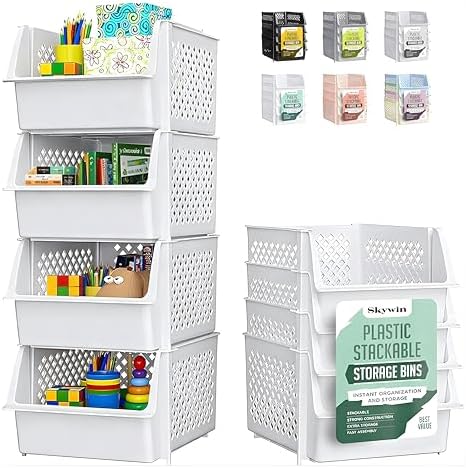
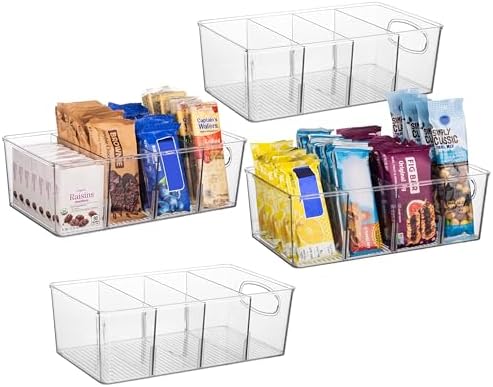
This distinction matters. Stackable bins (typically open-top or with a simple lid) are for storing packaged items — snack bars, sachets, small packets that are already individually sealed. Stackable airtight containers, like the Vtopmart 24-piece set, are for loose dry goods — flour, rice, oats, sugar — that need a proper seal against moisture and pests. Most well-organised small pantries use both: airtight containers for loose decanted goods, and simple stackable bins for grouping pre-packaged items.
Where Stackable Bins Make the Biggest Difference
In my experience, the best stackable pantry bins for small shelves have the most dramatic impact in these specific areas:
- Snack drawers/shelves — grouping loose snack packets that would otherwise slide around and get lost
- Spice packets and sachets — stock cubes, gravy granules, sauce sachets that don’t have their own structure
- Baking small items — sprinkles, food colouring, small decoration items that are easy to lose at the back of a deep shelf
- Tinned good overflow — when you have more tins than fit in a single row, a wire or solid stackable bin lets you double the row without anything rolling
Budget Expectations
Genuinely good stackable bins (the kind with reinforced bases and proper interlocking design) range from about £6–15 per bin depending on size, or £25–45 for a matched set of various sizes. Avoid the very cheapest options — the bases tend to warp under weight within months, undermining the entire point of buying stackable bins in the first place.
- Rice Storage Containers: The Best Options for Keeping Rice Fresh and Pest-Free
- Best Pantry Inventory Apps: How to Track Your Food Stock Without Losing Your Mind
- Best Pantry App 2026: The Top Apps for Tracking What You Have at Home
- What Food Does Not Go Bad? The Genuinely Long-Lasting Pantry Staples Worth Stocking
- The Pantry Moth Life Cycle Explained: Why Understanding It Helps You Get Rid of Them